How to Prepare for Your Bar Mitzvah Parasha, Step by Step
A calm Bar Mitzvah preparation plan: confirm the parasha, learn the text in your own handwriting, and practice with your teacher.
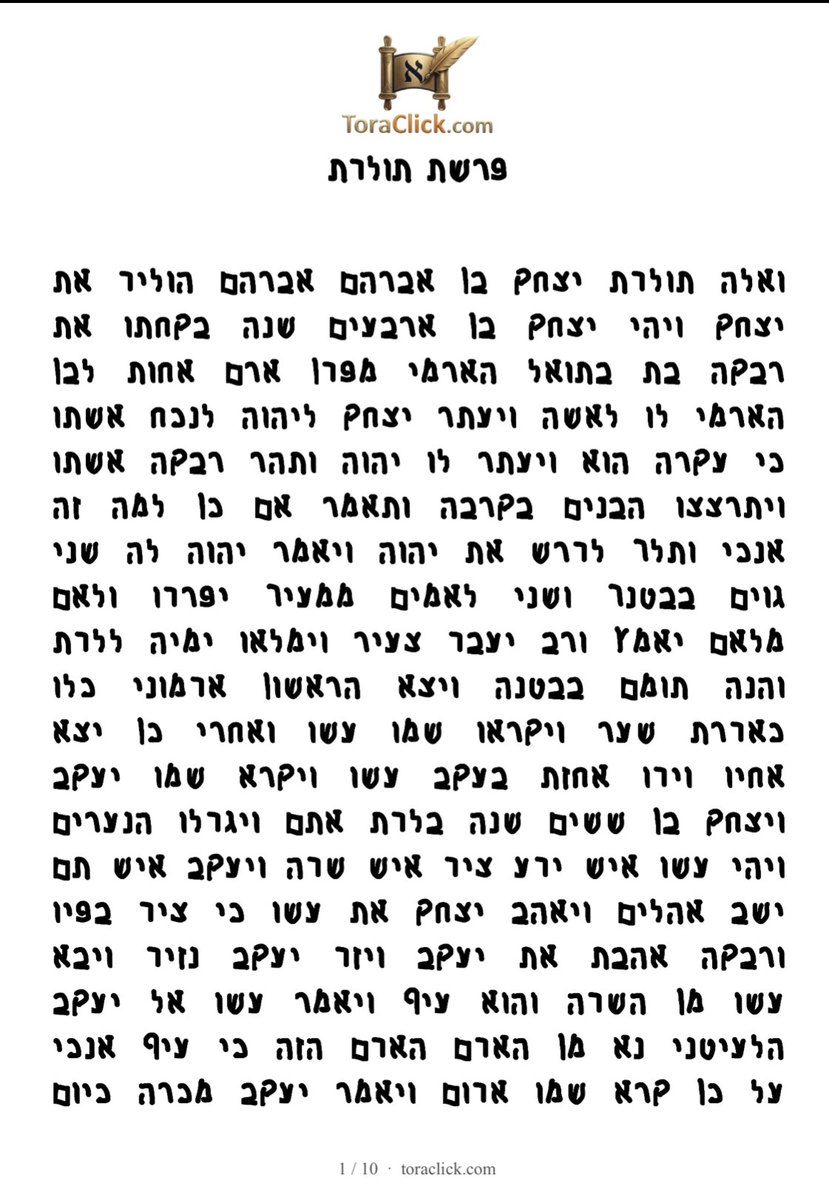
Preparation starts with the right week
Bar Mitzvah preparation is a long kindness, not a last-minute scramble. A boy becomes responsible for the mitzvot at thirteen by the Hebrew calendar. The portion he learns is the bar mitzvah parasha of the Shabbat when he will read, which is often the first Shabbat after that birthday, and sometimes a later Shabbat chosen with the community. Ask the rabbi which week it is before anyone prints a page or memorizes a tune. Write down the Hebrew date, the civil date of that Shabbat, and the name of the portion. If the family lives outside Israel, ask whether that week is read the same way in Israel. A few weeks of the year differ. Starting from the right parasha is the step that makes every later hour useful.
Step one: draw each letter once
Open the ToraClick homepage and give him a quiet half hour. He draws each Hebrew letter once, with a finger on a phone or tablet, or with a mouse on a computer. The site is built as one, two, three: draw the letters, press the button, and read. Include the five final forms, the shapes that close a word, so the alphabet he practices is the alphabet he will meet in the text. Twenty-two letters and those five endings are enough. He does not draw the Torah word by word. ToraClick builds the whole Torah, and also the Siddur and Tehillim, from the letters he has just made. Correct a shape that could be confused with its neighbor, such as dalet and resh, before you go on. A clear letter will matter more in a long portion than a fancy one.
Step two: open the bar mitzvah parasha
In the Torah reader, open the Parasha Finder. Choose the book, then the portion his rabbi named. All fifty-four weekly portions are listed, each with its opening chapter and verse. The reader jumps to that place, centers the first line, and highlights it in yellow. The highlight fades after a few seconds, which is long enough to see where the reading begins and short enough to leave the page calm. Read the opening line aloud together. Then read the next few lines without trying to sing them. Bar Mitzvah preparation at this stage is about knowing which words are there. Melody, cantillation, comes with a teacher. ToraClick does not teach the trop, and it should not be asked to. It keeps the text in front of him whenever he has ten quiet minutes.
Step three: a small daily reading
Divide the parasha into pieces he can finish. Once in the week, read the whole portion through so he knows the story or the subject from beginning to end. On the other days, reread one short section aloud. Keep a short list of words that feel stuck. Bring that list to the lesson instead of hoping the difficulty will disappear. If a verse is about a law or a name he does not know, write the question down and let the teacher answer it. A parent does not need to invent an explanation. The boy’s work is to become familiar, patient, and accurate. Familiarity is what makes the later singing possible. A page he already recognizes will not frighten him when the scroll is open in the synagogue.
Step four: look at the column he will meet
After the words are familiar on an ordinary page, open the Torah Scroll viewer. It shows the real Sefer Torah format: 245 columns of 42 lines, with the open and closed spaces that mark sections. Ask him to find the first words of his parasha in that layout. The line breaks will not match a printed chumash, and that difference is worth seeing before the morning of the Bar Mitzvah. He is not memorizing column shapes instead of words. He is learning that the public reading has a body, a width, and a tradition of spaces. The viewer uses his own letters. It is a study view. ToraClick does not replace a Sefer Torah, and a column on a screen is not the scroll the congregation will hear.
Step five: practice with a teacher, and print a copy
The teacher remains the person who listens, corrects, and decides how much of the portion he will read. Use ToraClick between lessons, not instead of them. When he knows the text well enough to follow it, download the parasha as a PDF from the Parasha Finder and print it. One clean copy on the desk is better than five crumpled ones. He can mark breath and hard words in pencil, if that is how his teacher works. Read the blessings of the Torah with the same teacher, from the community’s custom, not from a guess. The Siddur on ToraClick can show those prayers in his handwriting for study at home. It does not choose his nusach. If you want the printed page as a keepsake, see how to print the parasha in his own handwriting.
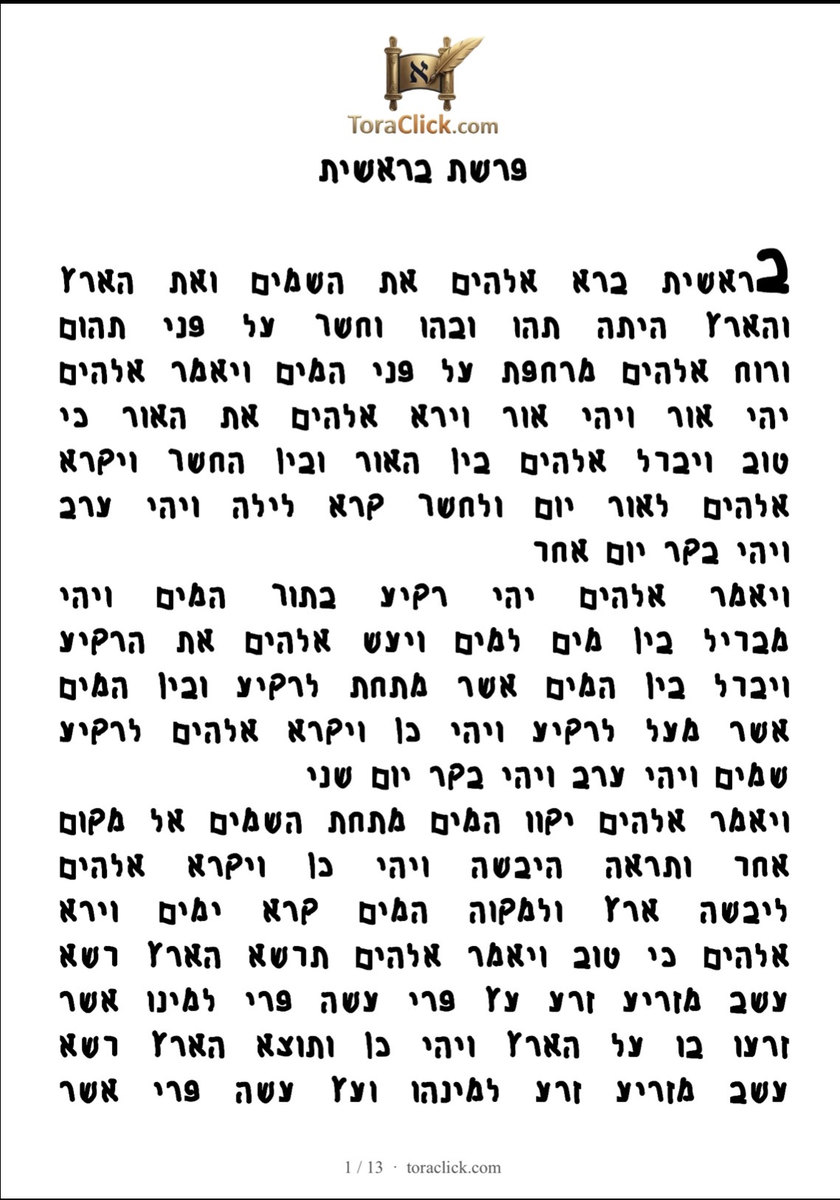
A rhythm that survives a busy month
Keep the plan smaller than your enthusiasm. A short session most days will do more than a heroic night once a week. Begin each session by finding the place again in the Parasha Finder, so the yellow line reminds him where the portion starts. End by naming one sentence he can say without looking. ToraClick is a non-profit, made in Israel, and everything on it is free. If a choice appears, a voluntary contribution or “I’ll do a good deed” keeps the whole site open. None of this fulfills the mitzvah of writing a Sefer Torah. ToraClick does not replace that mitzvah, and it does not fulfill it. It gives a Bar Mitzvah boy a way to spend more hours with his own parasha, in letters his hand already knows. That is a good way to prepare.
Frequently asked questions
How early should Bar Mitzvah preparation begin?
Ask the rabbi as soon as the date is known. Many boys study for months. Start by confirming the Shabbat and the parasha, then read the text often, in small pieces, between lessons with a teacher.
Can he learn the melody on ToraClick?
No. ToraClick shows the words, in his handwriting and in the scroll layout. Cantillation and the decision about what he will read belong to his teacher and his rabbi.
What are the practical steps on the site?
Draw each Hebrew letter once, open the Parasha Finder, read the highlighted portion, look at it in the Torah Scroll viewer, and print a study copy when he is ready. The path on the homepage is one, two, three.
Does this preparation replace writing a Sefer Torah?
No. ToraClick does not replace the mitzvah of writing a Sefer Torah, and it does not fulfill it. Preparation here means knowing and loving his bar mitzvah parasha. The public reading still uses a kosher scroll.