The Mitzvah of Writing a Torah, and What It Teaches a Bar Mitzvah Boy
What the mitzvah of writing a Sefer Torah teaches a Bar Mitzvah boy, from Deuteronomy 31:19 to Pirkei Avot, and what ToraClick does not replace.
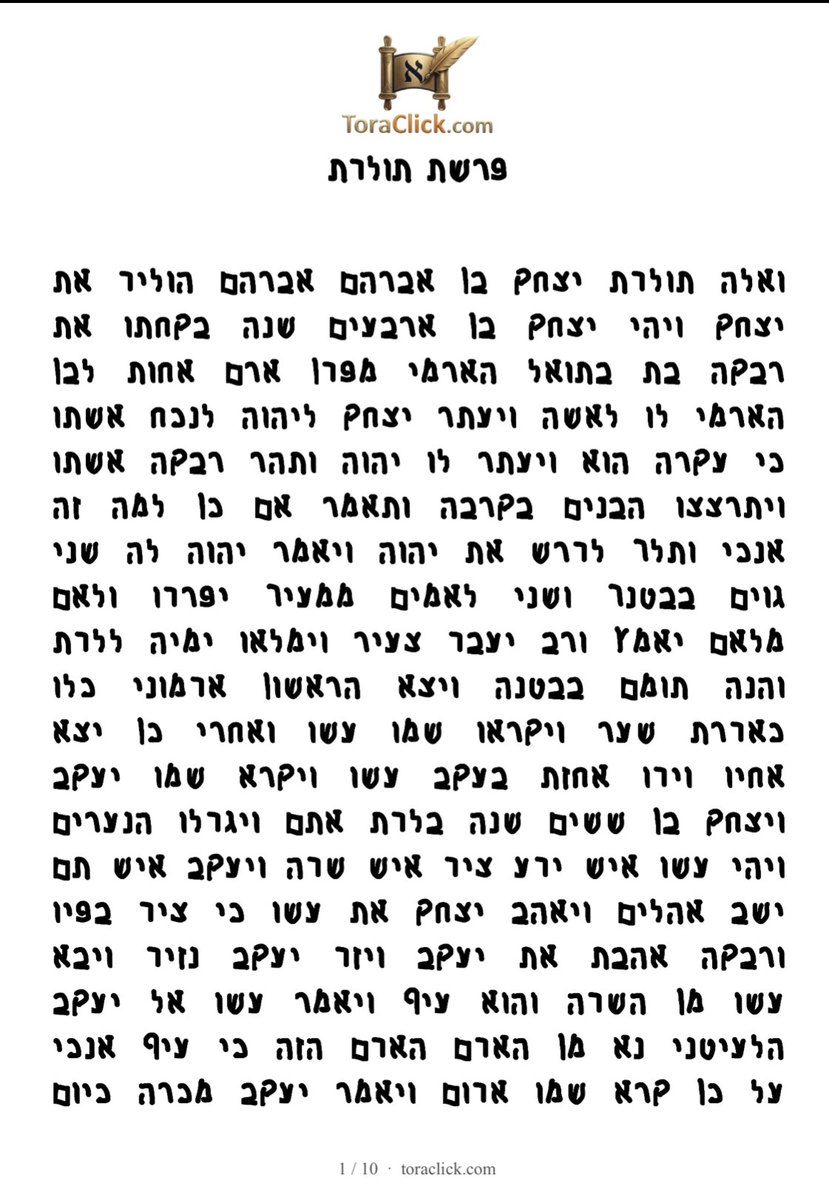
A verse a Bar Mitzvah boy can grow into
There is a mitzvah to write a Sefer Torah. Jewish tradition learns it from Deuteronomy 31:19, where Moses is told, “Now write this song for yourselves, and teach it to the children of Israel.” In the story of that chapter, the song is the poem that follows. The halakhah reads the command more broadly: the Torah itself is to be written, so that it will be taught and kept. A Bar Mitzvah boy is just becoming responsible for the mitzvot. He does not have to master this one in a weekend. He does need to hear it truly. The verse ties writing to teaching. A scroll that nobody learns is not the whole of the command. The boy who is learning his bar mitzvah parasha is already on the teaching side of that verse: the words are being put in his mouth.
What Menachot 30a says about a single letter
The Talmud, in Menachot 30a, teaches that a person who corrects even one letter in a Sefer Torah is considered as though he had written the entire scroll. The Shulchan Aruch records the same idea in Yoreh De’ah 270:1. The point is not that a small correction is a trick for avoiding the mitzvah. The point is that a Sefer Torah is a whole made of particulars. One letter, rightly made, can complete it. For a boy, this is a humane teaching. His Bar Mitzvah portion may feel large. He is not asked to swallow it in one glance. He is asked to care for the word in front of him, then the next. Seriousness about one letter is a form of respect. It is also a warning against carelessness: if one letter matters that much in a scroll, his practice letters deserve patience too. The comparison stops where the objects differ. A practice letter on a screen is not a correction in a Sefer Torah.
Yoreh De’ah 270, and the books we write in order to learn
Shulchan Aruch, Yoreh De’ah 270:1, states the mitzvah: it is a duty to write a Sefer Torah. Yoreh De’ah 270:2 brings the view of the Rosh, that in later generations the mitzvah is also expressed by writing the books from which people actually study: the Five Books, the Mishnah, the Talmud, and their commentaries. Study had to be possible, not only stored in a scroll that is read in public on set occasions. A family should not turn that paragraph into a slogan. It does not mean that any copy of any text, made in any way, completes the obligation. It means the tradition cared that Torah be written in a form people can learn. A rabbi is the person who says what this obliges in a particular life. This article is an invitation to read the sources, which are linked below, not a ruling.
One mitzvah leads to another
Pirkei Avot 4:2 records Ben Azzai: run to an easy mitzvah as to a hard one, because one mitzvah leads to another, and one transgression leads to another. The Hebrew phrase is familiar in many homes: mitzvah goreret mitzvah. A Bar Mitzvah is a natural moment for that sentence. The boy is not finishing Judaism. He is entering the chain. A first careful reading can lead to a second. A question asked of a teacher can lead to a better question. Helping someone on the way home from the celebration is not a smaller thing than the speech. ToraClick’s hope sits inside this teaching and does not inflate it. Drawing the alphabet, reading his parasha, and returning tomorrow are small acts. They are worth running toward. They are not the whole of the Torah’s demand, and they are not nothing.
What he can do with his own hand this month
On the ToraClick homepage he can draw each Hebrew letter once, with a finger or a mouse. The steps are one, two, three: draw, press the button, read. The Torah appears in his handwriting. The Torah Scroll viewer shows that text in the real format, 245 columns of 42 lines. The Parasha Finder opens his bar mitzvah parasha and highlights the first line in yellow until the highlight fades. He can print the portion and study it. He can also open the Siddur and Tehillim in the same letters. These are ways of staying near the text while a sofer’s work remains a sofer’s work. Use them as practice in attention. Then go to the lesson. The teacher’s correction of a word is worth more than another feature.
What ToraClick refuses to claim
This must be said in the same voice as the invitation, not in a footnote. ToraClick does not replace the mitzvah of writing a Sefer Torah, and it does not fulfill it. It does not write with a quill. It does not prepare parchment. It does not produce a scroll that is taken out for the congregation. A PDF of his parasha is a study page. A column on a screen is a way to see the layout. Neither one is a Sefer Torah. Eliyaou Benzguida built ToraClick, a non-profit made in Israel, as a doorway: a personal meeting with the text that might lead a person to study, and perhaps one day to take part in writing an actual scroll. The site’s own words ask for that humility. If a relative tells the boy that the website has discharged the mitzvah, correct it kindly and clearly. The mitzvah is larger than the tool, and the tool is honest about that.
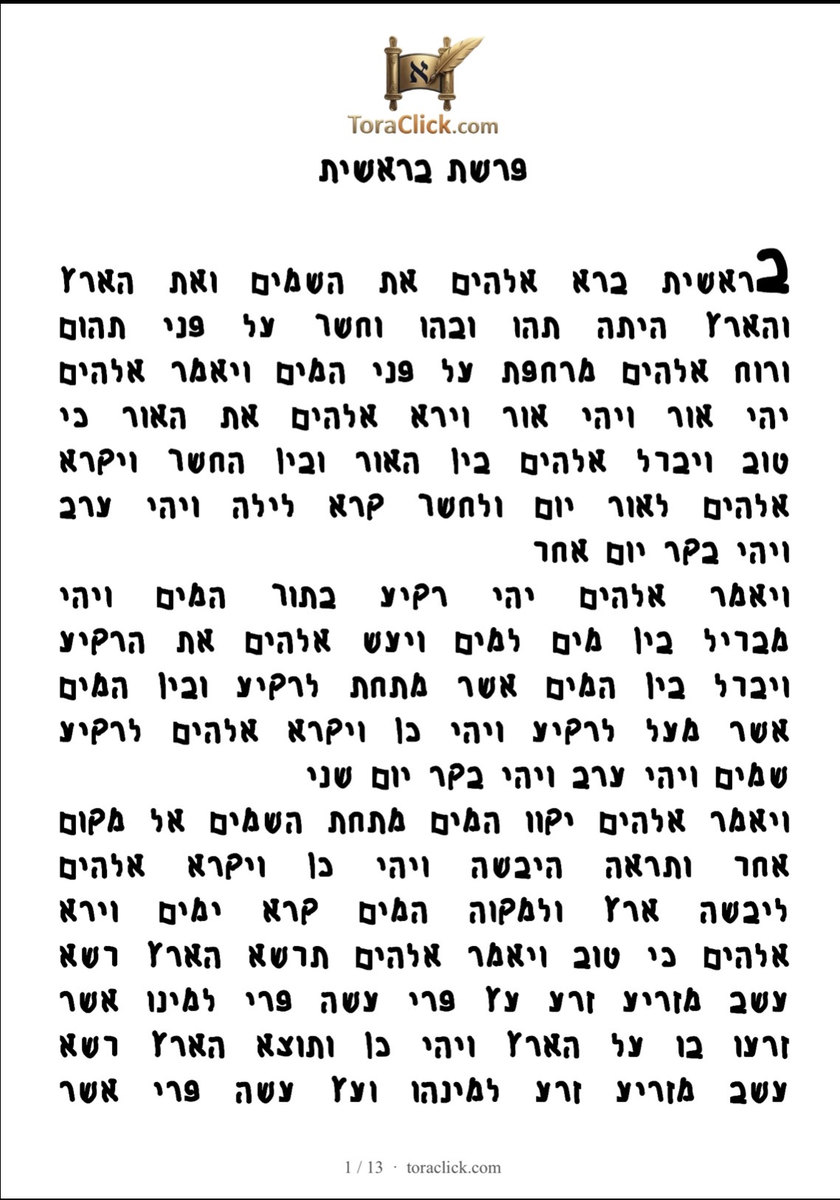
Bring the sources to the table
Read Deuteronomy 31:19 in a chumash, not only in a summary. Then sit with Menachot 30a, or with a teacher who can read it with you. Look at Shulchan Aruch, Yoreh De’ah 270:1–2, and at Pirkei Avot 4:2. The links under this article open those texts on Sefaria. You do not need to finish them in one evening. You need the boy to know that his parasha belongs to a people who write things down with care. Everything on ToraClick is free. Support is optional: a voluntary contribution, or “I’ll do a good deed,” keeps the whole site open. When you are ready to find his week in the cycle, use finding your Bar Mitzvah Torah portion by date. When you want the page in his letters, use print your parasha. Let one mitzvah lead. Do not pretend that the first step was the last.
Frequently asked questions
Where does the mitzvah of writing a Sefer Torah come from?
Jewish law learns it from Deuteronomy 31:19, “write this song for yourselves.” The Shulchan Aruch states the mitzvah in Yoreh De’ah 270. A rabbi should be asked how the obligation applies in a particular life. This article is an introduction.
What does Menachot 30a teach a beginner?
That correcting even one letter in a Sefer Torah is considered as though one had written the whole scroll. It teaches care for particulars. It does not mean a letter drawn on a website is that correction.
Does ToraClick fulfill the mitzvah?
No. ToraClick does not replace the mitzvah of writing a Sefer Torah, and it does not fulfill it. It helps a person see and study the text in his own handwriting. A kosher scroll is written by a sofer.
How does Pirkei Avot 4:2 fit a Bar Mitzvah?
Ben Azzai says to run to an easy mitzvah as to a hard one, because one mitzvah leads to another. Learning his parasha with patience can be the mitzvah that draws the next one closer. It is a beginning.